Skip to content

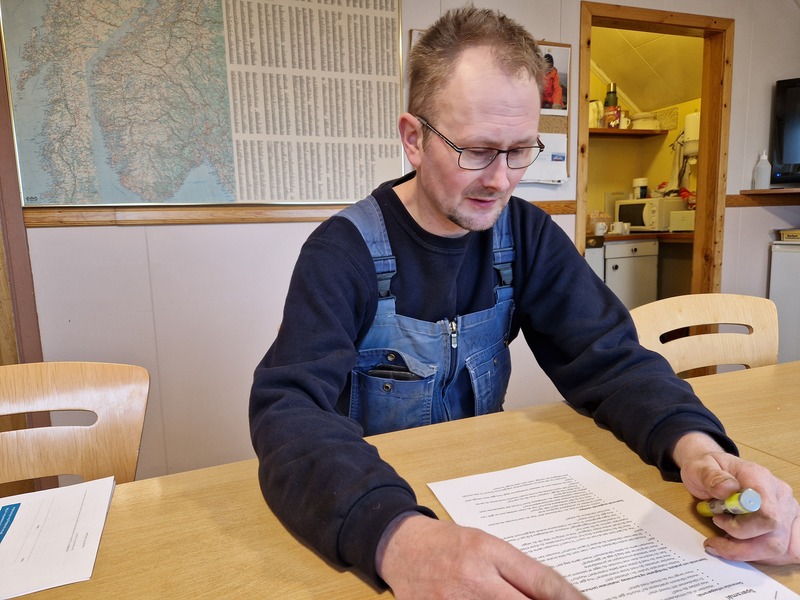
Ingebrigtsen, Yngve

Country:

Norway

Description:

He went to boat bulding school

Relation to the area

native

Title Description Type

Occupation

woodwork

Type of involvement

full-time paid job

Inventory ID:

MN_PR_05

Author of the entry:

Julie Therese Sæther

Gender:

male

Language:

Norwegian

Bio:

He went to boat bulding school

E-Mail:

post@samhold.no

Phone:

95331198


Knowledge and skills

What knowledge and skills are essential for the practitioner to engage with the cultural practice?

He has the knowledge and skills to build wooden boats. In his daily work he mainly repair wooden, plastic or aluminum boats.

How did the practitioner acquire those knowledge and skills?

He went to boat bulding school

Does the practitioner teach anyone the skills they possess? Who? How?

No he does not teach anyone at the moment

Material

What materials does the practitioner use?

The practitioner use wood, metal and other materials like hemp in his work with the boats.

Where does the practitioner get materials from?

He buys them at stores.

How does the practitioner manage leftovers?

There are rearly leftovers, he uses the materials he orders. If any, he uses them on other projects.

Production

What techniques does the practitioner use?

He uses different techniques, for example planing, grinding and carpentry.

What tools does the practitioner use?

He uses different tools, for example a plane, a sander and a hammer.

What are the practitioner’s relations with the tools they use? What meaning do the tools they use have to them?

Now adays he uses electrified tools, but he has a very old, handmade plane (høvel) that is dear to him.

What sources of energy does the practitioner use?

Regular electricity.

What waste is generated during production? How is it managed?

The waste is mangaed according to the state guidelines and Norwegian laws.

Workshop

Does the practitioner have a separate workshop/work space/etc.? Describe where it is located and what it is it like.

The workshop is separated from his home, but he lives nearby. The workshop has different rooms, one for tools and one for the boats.

Products and services

What kind of items does the practitioner produce?

The practitioner repair boats.

For what purposes does the practitioner produce them?

He repair them so they can be used at sea.

If items are produced for sale, where are they being sold?

No somebodys already owns them so they are not for sale.

What kind of services (if any) does the practitioner offer?

The services of repairing wooden, plastic or aluminum boats.

Does the practitioner provide repair/utilisation services?

Yes

Who are the practitioner’s customers (both products and services)?

The customers are fishermen and different local coastal associations.

Do the practitioner’s products/services have any certification/labels (e.g., place of origin, bio, organic, handmade, heritage product, etc.)? If yes, what?

Samhold slip is in it self a label of certification.

Tourism

Is the practitioner engaged in activities related to tourism? What kind of activities? When do they take place? Who are the tourists (e.g., domestic, foreign)?

No they are not in any relation to tourism.

Enter a direct quote from the interview (1-2 sentences) in the original language that reflects the practitioner’s feelings about the engagement with tourism (the quote should be potentially emotionally charged).

Ther is no qoute about tourism.

Partnership

Is the practitioner a member of any group/organisation? Are there any co-creation spaces/projects they are taking part in? Are they partnering with other practitioners? Are they collaborating with academia (researchers/research institutions, etc.)? Are they collaborating with public institutions (local government, museums, archives, schools, culture centres, etc.)?

They are in collaboration with Riksantikvaren, the Norwegian Stately Heritage center. Riksantikvaren is cofunding the raparation and refurbishment on the old vessels. They have alot of different customers they collaborate with, but maintenance of fishingboats in use in fisheries today is their main job. So they collaborate mostly with fishermen.

Challenges

What are the challenges the practitioner encounters (can be related to the practice and its different aspects, life in a rural area in general, etc.)

There are very few people left that know how to build wooden boats and know the reparing skills, so this is an endangered occupation.

Enter a direct quote from the interview (1-2 sentences) in the original language that reflects the practitioner’s feelings about the challenges they face (the quote should be potentially emotionally charged)

They have alot of work to do, and not so much time to do it in. They are very few workers at the company. There is also a concern of the funding of the repairs of the old boats.

References

Add references to sources related to the practitioner (academic literature, secondary sources, media publications, museum and archival data, etc.). Add as many rows as necessary. One reference per row.

www.samholdslip.no


Entry Author:

iain

Date of entry:

2025-09-02T08:38:59+00:00