Skip to content

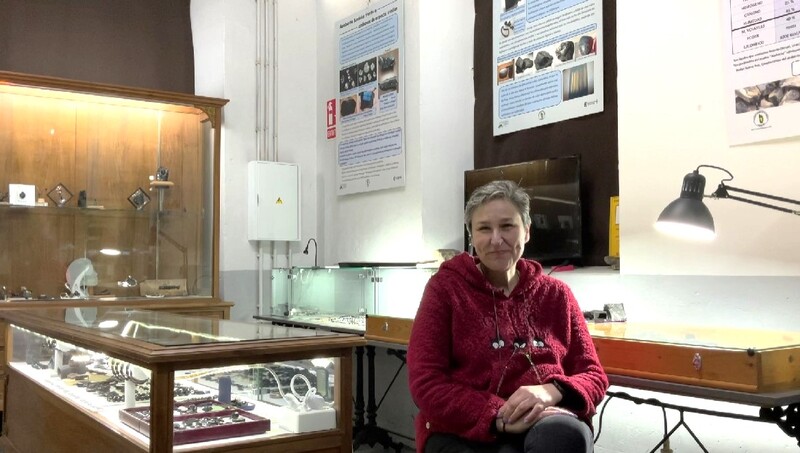
María Pérez

Country:

Spain

Description:

Maria has been a master jet artisan for 30 years. She started as a jeweler, but nowadays, working with jet is more important.


Relation to the area

incomer

She was born in the city of Gijón, but since 1997, she has been living in a small village with 15 inhabitants called La Madrera

Title Description Type

Occupation

fibre and textile crafts

Type of involvement

full-time paid job

Inventory ID:

LAPONTE_PR_03

Author of the entry:

Carmen Pérez Maestro

Start Date of Existence:

70´s

Gender:

female

Bio:

Maria has been a master jet artisan for 30 years. She started as a jeweler, but nowadays, working with jet is more important.

Social Media:

facebook instagram

E-Mail:

mariaperezazabache@hotmail.es

Phone:

605 01 27 70


Knowledge and skills

What knowledge and skills are essential for the practitioner to engage with the cultural practice?

It is essential to recognize that the raw material is authentic Jurassic jet, understand its characteristics, and be familiar with the carving techniques.

How did the practitioner acquire those knowledge and skills?

Jet came into the artisan’s life by chance. She was starting out in jewelry making, and after settling in the village, Néstor Costales (the last master artisan of Argüeru) gave her a small raw jet stone. From that moment on, she began to get her hands dirty with it, and jewelry took a back seat. She taught herself how to work with the mineral, and after many years of practice, she has ended up teaching others

Does the practitioner teach anyone the skills they possess? Who? How?

Yes, she conducts jet carving workshops in her museum-shop in Villanueva

Material

What materials does the practitioner use?

She works with jet and silver.Sometimes she uses other gemstones to create her pieces.

Where does the practitioner get materials from?

The jet is local, and the silver is foreign

How does the practitioner manage leftovers?

The stone is fully utilized

Production

What techniques does the practitioner use?

She applies jewelry techniques to work with jet. Cutting, carving, and polishing are the processes followed to work the stone

What tools does the practitioner use?

She works with dental prosthetic tools, which operate with a micromotor, such as diamond discs and tungsten carbide burs

What are the practitioner’s relations with the tools they use? What meaning do the tools they use have to them?

There is no special relationship with the tools. Although her favorite tools are the diamond disc and the thickest carbide bur.

What sources of energy does the practitioner use?

Electricity

What waste is generated during production? How is it managed?

During the jet carving process, a very fine brown dust is generated. This is absorbed by small electric vacuum cleaners while working

Workshop

Does the practitioner have a separate workshop/work space/etc.? Describe where it is located and what it is it like.

Maria has a workshop in her house in the village, but she also has an educational space (in the form of a small museum), a learning area, and a shop in Villaviciosa

Products and services

What kind of items does the practitioner produce?

Unique jewelry pieces with precious metals, jet from Asturias, and other gemstones. Rings, pendants, necklaces, earrings, rosettes, bracelets, etc

For what purposes does the practitioner produce them?

For sale

If items are produced for sale, where are they being sold?

In person at the store in Villaviciosa

What kind of services (if any) does the practitioner offer?

Educational classroom-museum, workshops and jewelry for sale

Does the practitioner provide repair/utilisation services?

It's not something that happens regularly, but there have been people who have brought her objects to repair

Who are the practitioner’s customers (both products and services)?

The people who attend the regular workshops are usually locals, while those who visit the educational classroom-museum are typically outsiders. People of all kinds purchase her jewelry

Do the practitioner’s products/services have any certification/labels (e.g., place of origin, bio, organic, handmade, heritage product, etc.)? If yes, what?

All the pieces that leave her shop come with a certificate stating that they are made with authentic Asturian Jurassic jet, handmade, and are unique pieces. However, it is not an official label, but rather one issued by the artisan herself.

Tourism

Is the practitioner engaged in activities related to tourism? What kind of activities? When do they take place? Who are the tourists (e.g., domestic, foreign)?

The relationship she has with tourism is educational, as the place she has in the village houses an educational classroom-museum that is visited by both domestic and foreign tourists

Enter a direct quote from the interview (1-2 sentences) in the original language that reflects the practitioner’s feelings about the engagement with tourism (the quote should be potentially emotionally charged).

"El azabache esta relacionado con el turismo por que es un bien cultural y es de la zona y la conjunción que hay en el local de Villaviciosa con tienda exposición y talleres de la asociación es lo que utilizamos para difundir y dar a conocer el azabache"

Partnership

Is the practitioner a member of any group/organisation? Are there any co-creation spaces/projects they are taking part in? Are they partnering with other practitioners? Are they collaborating with academia (researchers/research institutions, etc.)? Are they collaborating with public institutions (local government, museums, archives, schools, culture centres, etc.)?

She is the president of the association 'Jurassic Jet of Villaviciosa,' which was founded in 2017 after serious disagreements with the jet artisan guild and in response to the uncontrolled invasion of foreign materials replacing genuine jet. The association is made up of artisans, geologists, gemologists, botanists, biologists, archaeologists, researchers, and others... in short, defenders of authentic jet and its cultural heritage. Their interest is investigative, educational, and informative. She collaborates with the University of Oviedo in their university extension courses

Challenges

What are the challenges the practitioner encounters (can be related to the practice and its different aspects, life in a rural area in general, etc.)

The challenges faced by this sector, from the lack of raw materials to the urgent need for training and greater institutional support.The high-quality Asturian jet, originating from Jurassic protopine trees and unique for its physical properties, is in a critical situation due to the scarcity of raw material. It has reached the point where artisans are forced to search through rubble piles since its extraction is not permitted. Another challenge facing the industry is the unfair competition from materials sold as jet, which in reality, are not. María Pérez insists that it is vital to differentiate authentic Asturian jet from lignite coming from Bulgaria or Argentina, which dominates the market. Lastly, there is the challenge of the continuity of the craft, as without raw material, it cannot continue

Enter a direct quote from the interview (1-2 sentences) in the original language that reflects the practitioner’s feelings about the challenges they face (the quote should be potentially emotionally charged)

"La declaratoria de Bien de Interes Cultural (BIC) del azabache no es suficiente, hay que dar más pasos, determinar verdaderamente lo que es y no que no es (el verdadero azabache)".

References

Add references to sources related to the practitioner (academic literature, secondary sources, media publications, museum and archival data, etc.). Add as many rows as necessary. One reference per row.

http://www.azabachejurasico.com/
https://www.lne.es/villaviciosa/2025/01/15/cultura-azabache-joya-asturiana-lucha-113396508.html
https://pegadosalatierra.elcomercio.es/maria-perez-maestra-azabachera-villaviciosa/


Entry Author:

iain

Date of entry:

2025-06-18T09:11:22+00:00